Theatre · 1903
Teatro Juárez
A jewel of the Porfirian era: a twelve-column portico crowned by bronze muses and a grand stairway guarded by lions. It is the heart of the Festival Internacional Cervantino.
City guide
Alleys, squares, theatres and legends just a stroll from the house. Here is what not to miss and how long it takes to walk there from the hotel.
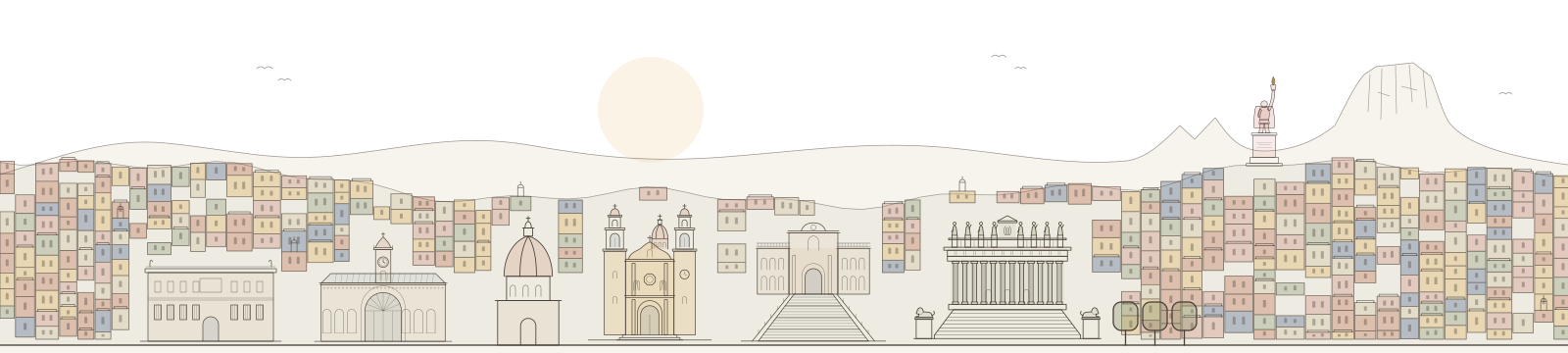
Guanajuato has been a World Heritage Site since 1988, when UNESCO inscribed its historic town and adjacent mines. Its name comes from the Purépecha language and is usually translated as “mountainous place of frogs”: that is why frogs appear everywhere, including in our Marfil suite.
Underground streets, alleys climbing the hills, hidden little squares and colourful façades: the best way to discover it is on foot. Every October, the Festival Internacional Cervantino fills its streets with theatre, music and dance.
Walking distances calculated from the house along pedestrian routes; times assume a relaxed pace.
Theatre · 1903
A jewel of the Porfirian era: a twelve-column portico crowned by bronze muses and a grand stairway guarded by lions. It is the heart of the Festival Internacional Cervantino.
Lookout
The hero who set fire to the Alhóndiga’s door in 1810 watches over the city from San Miguel hill. Ride the funicular from behind the Teatro Juárez and wait for sunset.
Square
The city’s living room: Indian laurels trimmed into cubes, a bandstand and café terraces. At dusk, the callejoneadas set off from here.
Baroque church
The ochre-coloured church presiding over Plaza de la Paz. It houses the image of the city’s patroness, Our Lady of Guanajuato.
Historic building
Its white building and monumental stairway are among the most recognisable sights of this university city.
Legend
Less than 70 centimetres separate its balconies, the setting for the legend of Doña Carmen and Don Luis. Tradition says couples should kiss on the third step.
Market · 1910
Its iron hall and clock tower opened for the centenary of Independence. Inside: traditional sweets, crafts and market food.
Museum
The former granary where one of the first battles of Mexican Independence was fought in 1810. Today it is the Regional Museum of Guanajuato.
Museum
A collection devoted to Don Quixote, with works by artists from around the world, in the city known as the Cervantine Capital of the Americas.
Church · 18th century
A Churrigueresque jewel built by the Jesuits next to the University, with a dome that stands out on the city skyline.
Promenade
A tree-lined walk beside the 18th-century reservoir, lined with Porfirian mansions: perfect for an easy stroll.
Museum
The house where the muralist was born in 1886, now a museum with works from his early years.
Museum
One of Mexico’s most visited museums, with naturally mummified bodies.
Mine and church
One of the richest silver mines in the world in the 18th century and, beside it, the Churrigueresque church of San Cayetano.
Tips
You will walk through alleys, stairways and cobbled streets: flat shoes are best.
Ride the funicular from behind the Teatro Juárez and stay to watch the city lights come on.
At nightfall, the student minstrels set off from the Jardín de la Unión and sing their way through the alleys.
Every October the city fills with performances: book well in advance.
Getting here
Del Bajío International Airport (BJX) is about 45 minutes away by car.
Drive right up to our main entrance and park for free. From Mexico City, about four and a half hours by road.
About 15 minutes to the Teatro Juárez along main streets that are safe and well lit.
Sanbernabé Tres
Cerrada San Bernabé 3, Pastita, 36090 Guanajuato, Gto., MéxicoShowing the map loads content from Google Maps.
Book direct
Check availability and book online in seconds, or write to us: we reply personally and will gladly help you plan your visit to Guanajuato.
Sanbernabé Tres
AI receptionist · online
AI assistant. The hotel team can read this conversation. Privacy ·